Pages

Our Lady's Little Scribe seeks to use the internet for sharing the Catholic faith and Franciscan spirituality, going from Gospel to life and life to the Gospel.


The silk painting, shown above, is by Ty Mam Duw, Poor Clare Colettines, Hawarden, WALES GB. Their website is here. Ty Mam Duw is Welsh and means The House of the Mother of God. Our Lady of the Pearl cherishes their friendship and is grateful for their many kindnesses and prayers. The image is used with permission.

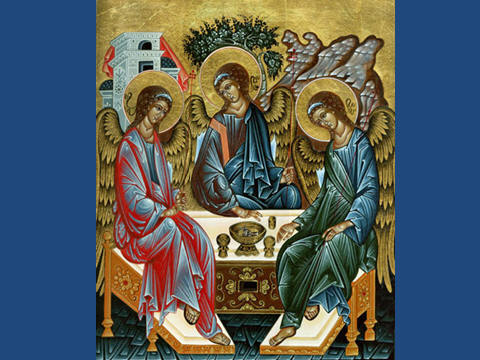
Entertaining Angels

Entertaining Angels
You are welcome to join in with your thoughts and spiritual inspirations and to share information. To write, click the word "comments" found after each post.
Showing posts with label Saint Clare. Show all posts

Tuesday, November 10, 2009

Saint Francis and A New Form of Life

By Ouida Tomlinson, SFO

Saint Francis created a new form of life, different from and more difficult than the monastic and canonical forms in favor during the early 1200’s. He was deeply convinced that the Lord Jesus Christ was guiding him.

Followers soon joined him in his new life, and they formed a fraternity based on the gospel, following in the footsteps of Our Lord Jesus Christ. They were both active and contemplative, preachers, living by the work of their hands, caring for the sick and the poor and begging when necessary. They spent time in daily prayer, together and in solitude. They prayed the Liturgy of the Hours and other prayers. Francis wrote their form of life “in a few simple words,” which the Lord inspired him to write.

The Lord inspired in Francis the desire to live as Jesus and his disciples had lived, to follow a life more closely resembling the life of Jesus during his early mission, shared with Mary and his disciples. Jesus was poor, a transient, living on alms, he, his mother and his disciples. The Lord inspired Francis to live the gospel life. This is in contrast to the religious communities of his day which sought to imitate the early Christian community in Jerusalem described in the book of Acts.

Saint Clare developed the “new form of life” in a women’s community, combining the elements of monastic life with the life of lay women penitents and characterized by sisterly communion, prayer and manual labor. There was no requirement for a dowry for entrance. The women relied on the work of their hands, and when that was not enough, they relied on begging, especially that done by the brothers. Clare’s Rule was the first of its kind, written by a woman for women.

Other groups, during the times before and around the time of Francis, had pointed to the Gospel as their rule also, but unlike these groups, Francis stayed in close communion with the Papacy, respecting the Pope and clergy.

The spirituality of Saint Francis and the Franciscan tradition is Christ-centered. Christocentric. There are several themes of this spirituality. Among them are poverty or living without grasping; being contemplative in places of solitude (Francis’ rule for the brothers living in hermitages); the suffering of Christ and the cross (suffering, death and glorification); the cross as the depths of charity; Francis in his physical mirroring of Christ’s suffering and Clare’s mystical identification with Christ, described in her writings; creation, nature, the world as a revelation of God; Canticle of the Creatures; and Francis’ unique relationship with animals, plants, and natural elements. Francis combined austerity of life with an infectious joy.

The incarnation is very important in Franciscan spirituality. From this Francis discovers that God is good, humble and generous. He does not hold onto anything, even divine status. All creation proceeds from the Son and this Son comes to us as a creature. Francis discovers what it means to be made in the image of God as he looks at Jesus. Thus he learns what it means to be himself, to know God, and the other (brothers and sisters which include human beings and all creation).

The story of Christmas at Greccio, with the simplicity, humility and poverty that are present, portray the marks of the life of Jesus. The Feast of Christmas, the Eucharist and the example of Mary pointed Francis toward the poverty and humility of God revealed in Jesus. This Jesus who born in a shelter for the animals, this Jesus who lived as a poor man and died for us on a cross, this Jesus who humbles himself to descend from his throne in heaven to become bread and wine for us, this poor Jesus is the way, the truth and the life. For Francis, poverty begins with the example of God as seen in Jesus.

"Have among yourselves the same attitude that is also yours in Christ Jesus Who, though he was in the form of God, did not regard equality with God something to be grasped. Rather, he emptied himself, taking the form of a slave, coming in human likeness; and found human in appearance, he humbled himself, becoming obedient to death, even death on a cross. Because of this, God greatly exalted him and bestowed on him the name that is above every name, that at the name of Jesus every knee should bend, of those in heaven and on earth and under the earth, and every tongue confess that Jesus Christ is Lord, to the glory of God the Father." Philippians 2:5-11.

"For you know the gracious act of our Lord Jesus Christ, that for your sake he became poor although he was rich, so that by his poverty you might become rich. 2 Corinthians 8:9.

The poverty of Francis was a response to Jesus who did not “grasp” or cling to divine status. He let go of it to be among us as a servant. Poverty must have this Christological understanding or else it becomes simply a penitential practice, a means of ascetical discipline or moral self-improvement whereby it is only a matter of having fewer of this or that, making a caricature out of the vision of Francis.


SUGGESTED READING AND INSPIRATION FOR MOST OF THIS WRITING
Poverty and Joy: The Franciscan Tradition by William J. Short, OFM, ISBN-10: 1570752958, ISBN-13: 978-1570752957.

Tuesday, December 18, 2007

Tomorrow Shall Be My Dancing Day

(posted for Sr. Fidelis Hart, OSC)

Tomorrow shall be my dancing day
I would my true love did so chance
To see the legend of my play
To call my true love to my dance

Sing O my love, O my love, my love, my love
This have I done for my true love

Then was I born of a virgin pure
Of her I took fleshly substance
Thus was I knit to man's nature
To call my true love to my dance

Sing O my love, O my love, my love, my love
This have I done for my true love

In manger laid and wrapped I was
So very poor this was my chance
Betwixt an ox and a silly poor ass
To call my true love to my dance

Sing O my love, O my love, my love, my love
This have I done for my true love

Tomorrow shall be my dancing day
I would my true love did so chance
To see the legend of my play
To call my true love to my dance

Sing O my love, O my love, my love, my love
This have I done for my true love

Sing O my love, O my love, my love, my love
This have I done for my true love

(Click here for singing.)


Poor Clares
St. Clare's Monastery
New Orleans, LA
(picture taken a few years ago)

Tuesday, October 30, 2007

The Times In Which They Lived - Saint Francis & Saint Clare

There were major political, social and religious trends that had developed by the time of the birth of Francis in 1181 or 1182. These trends continued on during his lifetime and Clare’s, along with a setting of violence and war. They shaped his life and the society into which he was born.

These are some of the primary points of a book I am reading, Francis of Assisi: Return to the Gospel, by Eloi Leclerc, OFM (translated and published with the American edition in 1983 by Franciscan Herald Press, out of print). It is not a biography but an attempt to understand Francis in light of the times in which he lived.

The jacket cover provides very good information for Franciscans to remember in understanding Saint Francis. I quote:

"Of primary importance to this work on Francis is the changing world in which he found himself. His was a period in which the foundations of Feudalism were violently shaken by the advance of the 'commune.' A vertical, stable, hierachical way of life wherein vassels swore oaths of fealty to lords was giving way to the more horizonal, democratic, highly mobile, merchant society whose members valued highly the characteristics of equality and fraternity.

"Francis, child of Feudalism (a real desire for the panache of knighthood) but mostly of the commune, found himself eventually in a position to step back and evaluate both societies. In the merchant class he saw his father and the greed of the breed. In the Church he winced at the striving for wealth and power among Church leaders.

"At the sensitive hands of the author, the son of Pietro Bernardone comes forth as one in whom the call of the divine blended with the highest ideals of Feudalism and with the fabric of the merchant approach. On that fateful day in February 1208, Francis opened the Scriptures to Jesus' sending of the Apostles. Inspired, Francis saw the answer he sought - the new way of life to serve his leige Lord with the mobility of the apostles as opposed to the immobility of the feudal system, with the practice of poverty as opposed to the lust for money of the secular society, and with the dedication to the democratic fraternity of true brotherhood. Friar Minor on the go was he.

"Francis of Assisi is not a true biography but an attempt to understand Francis in the light of history. Once the author has shown the fundamental change in history and Francis' envelopment in it, the rest falls in line. The new movement initiated by Francis was a strong and true departure from the feudal monasticism. As great numbers swelled the ranks of the Order there had to be a choice: to follow the free (somewhat anarchical) spirit of the early followers or the more secure and ordered monastic approach.

"In Leclerc's hands Francis sees and trembles because of what he sees as a loss of his ideals which the world so much needed. The reader feels the heaviness of the solitude, the glory of the Stigmata on Alverna, the uplifting idealism of Francis and Clare, and peacefulness in the meeting of Sister Death. But most of all, to the present day follower of Francis there is the clear presentation of the ideal and the challenge to follow. This is the moment for all Franciscans to watch carefully Francis of Assis and his return to the gospel."


Leclerc, in Francis of Assisi, says that after the ecstasy of Saint Francis and receiving the stigmata, Saint Francis wrote a hymn of praise to console Brother Leo. He wrote his Te Deum. It welled up from his heart and leaves us all in dazzled amazement and eyes fixed on the reality of God.

THE PRAISES OF GOD

You are the holy Lord God Who does wonderful things.
You are strong. You are great. You are the Most High
You are the almighty King. You holy Father,
King of heaven and earth.

You are Three and One, the Lord God of god.;
You are the good, all good, the highest good,
Lord God, living and true.

You are love, charity; You are wisdom, You are humility,
You are patience, You are beauty, You are meekness,
You are security, You are rest,
Your are gladness and joy, You are our hope, You are justice,
You are moderation, You are all our riches to sufficiency.

You are beauty, You are meekness,
You are our protector, You are our custodian and defender,
You are strength, You are refreshment, You are our hope,
You are our faith, You are our charity,
You are our sweetness, You are our eternal life:
Great and wonderful Lord, Almighty God, Merciful Savior!
Amen.
(Saint Francis of Assisi)
* * *

If anyone would like to read more on the times of St. Francis and St. Clare, its political, social and religious trends, one of my writings with a timeline is linked on Our Lady of the Pearl's website, as a word document at: http://www.ourladyofthepearl.com/Saint_Francis.htm.