Pages

Our Lady's Little Scribe seeks to use the internet for sharing the Catholic faith and Franciscan spirituality, going from Gospel to life and life to the Gospel.


The silk painting, shown above, is by Ty Mam Duw, Poor Clare Colettines, Hawarden, WALES GB. Their website is here. Ty Mam Duw is Welsh and means The House of the Mother of God. Our Lady of the Pearl cherishes their friendship and is grateful for their many kindnesses and prayers. The image is used with permission.

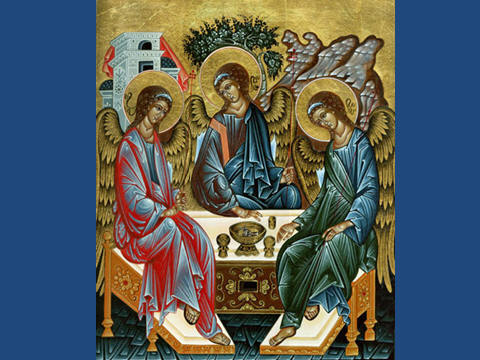
Entertaining Angels

Entertaining Angels
You are welcome to join in with your thoughts and spiritual inspirations and to share information. To write, click the word "comments" found after each post.
Showing posts with label Hope. Show all posts

Tuesday, February 26, 2008

God's Remedy

A few days ago I was grooming Tashee, one of my Maltese dogs. I confess that I had let her go too long and had not combed and brushed her beautiful long hair often enough lately. Combing through wet, tangled hair is a long, slow process. As I began to comb her, I decided to listen to a reading of Pope Benedict XVI's encyclical on hope, Spe Salvi. This may be found here on Boston Catholic Journal.

The reader has an excellent voice and speaks with much skill. More than that, he does not intrude. Like a quietly spoken servant, he conveyed the words of our Holy Father. As I combed and groomed Tashee, who wiggled and sometimes growled, the words began to wash over me. I was amazed at their power (through hearing) to bring new insights and graces in the midst of so much distraction.

My heart responded especially to the section on eternal life (10-12). I thought again of my mother's death in December 2006, and my sorrow, how much we miss her. With her going, my own death seems closer as if she were the buffer between me and that day. This causes me to have many mixed feelings, but my age and health issues are progressed enough that I can see that death, in the Lord's timing, truly is a gift and can be embraced.

Our Holy Father, in the section on eternal life, writes about death, quoting St. Ambrose and St. Augustine. Under No. 10, he discusses baptism and then turns to the matter of death, which St. Ambrose refers to as God's remedy. A part of No. 10 is quoted below:

  • But then the question arises: do we really want this—to live eternally? Perhaps many people reject the faith today simply because they do not find the prospect of eternal life attractive. What they desire is not eternal life at all, but this present life, for which faith in eternal life seems something of an impediment. To continue living for ever —endlessly—appears more like a curse than a gift. Death, admittedly, one would wish to postpone for as long as possible. But to live always, without end—this, all things considered, can only be monotonous and ultimately unbearable. This is precisely the point made, for example, by Saint Ambrose, one of the Church Fathers, in the funeral discourse for his deceased brother Satyrus: “Death was not part of nature; it became part of nature. God did not decree death from the beginning; he prescribed it as a remedy. Human life, because of sin ... began to experience the burden of wretchedness in unremitting labour and unbearable sorrow. There had to be a limit to its evils; death had to restore what life had forfeited. Without the assistance of grace, immortality is more of a burden than a blessing”. A little earlier, Ambrose had said: “Death is, then, no cause for mourning, for it is the cause of mankind's salvation”.

Our Holy Father continues his writing about eternal life in numbers 11 and 12. He ends with a great crescendo of joy, taking us from Lent into Easter joy which lies before us.

  • To imagine ourselves outside the temporality that imprisons us and in some way to sense that eternity is not an unending succession of days in the calendar, but something more like the supreme moment of satisfaction, in which totality embraces us and we embrace totality—this we can only attempt. It would be like plunging into the ocean of infinite love, a moment in which time—the before and after—no longer exists. We can only attempt to grasp the idea that such a moment is life in the full sense, a plunging ever anew into the vastness of being, in which we are simply overwhelmed with joy. This is how Jesus expresses it in Saint John's Gospel: “I will see you again and your hearts will rejoice, and no one will take your joy from you” (16:22). We must think along these lines if we want to understand the object of Christian hope, to understand what it is that our faith, our being with Christ, leads us to expect.

BOOK RECOMMENDATIONS: Spe Salvi by Pope Benedict XVI. Click image to order or for more information.

Aquinas and More Catholic Goods - For all your Catholic needs

Saved In Hope: Spe Salvi

Saved In Hope: Spe Salvi

Friday, January 11, 2008

“Spe salvi facti sumus”— "in hope we were saved"

Excerpts from "Spe Salvi"
Pope Benedict XVI's Encyclical on Hope

"Here too we see as a distinguishing mark of Christians
the fact that they have a future:
It is not that they know the details of what awaits them,
but they know in general terms that their life will not end in emptiness."

* * *

"The one who has hope lives differently;
the one who hopes has been granted the gift of a new life."

* * *

"Yet at this point a question arises: in what does this hope consist which, as hope, is “redemption”? The essence of the answer is given in the phrase from the Letter to the Ephesians quoted above: the Ephesians, before their encounter with Christ, were without hope because they were “without God in the world”. To come to know God—the true God—means to receive hope. We who have always lived with the Christian concept of God, and have grown accustomed to it, have almost ceased to notice that we possess the hope that ensues from a real encounter with this God. The example of a St. of our time can to some degree help us understand what it means to have a real encounter with this God for the first time. I am thinking of the African Josephine Bakhita, canonized by Pope John Paul II. She was born around 1869—she herself did not know the precise date—in Darfur in Sudan. At the age of nine, she was kidnapped by slave-traders, beaten till she bled, and sold five times in the slave-markets of Sudan. Eventually she found herself working as a slave for the mother and the wife of a general, and there she was flogged every day till she bled; as a result of this she bore 144 scars throughout her life. Finally, in 1882, she was bought by an Italian merchant for the Italian consul Callisto Legnani, who returned to Italy as the Mahdists advanced. Here, after the terrifying “masters” who had owned her up to that point, Bakhita came to know a totally different kind of “master”—in Venetian dialect, which she was now learning, she used the name “paron” for the living God, the God of Jesus Christ. Up to that time she had known only masters who despised and maltreated her, or at best considered her a useful slave. Now, however, she heard that there is a “paron” above all masters, the Lord of all lords, and that this Lord is good, goodness in person. She came to know that this Lord even knew her, that he had created her—that he actually loved her. She too was loved, and by none other than the supreme “Paron”, before whom all other masters are themselves no more than lowly servants. She was known and loved and she was awaited. What is more, this master had himself accepted the destiny of being flogged and now he was waiting for her “at the Father's right hand”. Now she had “hope” —no longer simply the modest hope of finding masters who would be less cruel, but the great hope: “I am definitively loved and whatever happens to me—I am awaited by this Love. And so my life is good.” Through the knowledge of this hope she was “redeemed”, no longer a slave, but a free child of God. She understood what Paul meant when he reminded the Ephesians that previously they were without hope and without God in the world—without hope because without God. Hence, when she was about to be taken back to Sudan, Bakhita refused; she did not wish to be separated again from her “Paron”. On 9 January 1890, she was baptized and confirmed and received her first Holy Communion from the hands of the Patriarch of Venice. On 8 December 1896, in Verona, she took her vows in the Congregation of the Canossian Sisters and from that time onwards, besides her work in the sacristy and in the porter's lodge at the convent, she made several journeys round Italy in order to promote the missions: the liberation that she had received through her encounter with the God of Jesus Christ, she felt she had to extend, it had to be handed on to others, to the greatest possible number of people. The hope born in her which had “redeemed” her she could not keep to herself; this hope had to reach many, to reach everybody."
Go to Boston Catholic Journal for audio.

Our Lady of Hope
(Novena)