Pages

Our Lady's Little Scribe seeks to use the internet for sharing the Catholic faith and Franciscan spirituality, going from Gospel to life and life to the Gospel.


The silk painting, shown above, is by Ty Mam Duw, Poor Clare Colettines, Hawarden, WALES GB. Their website is here. Ty Mam Duw is Welsh and means The House of the Mother of God. Our Lady of the Pearl cherishes their friendship and is grateful for their many kindnesses and prayers. The image is used with permission.

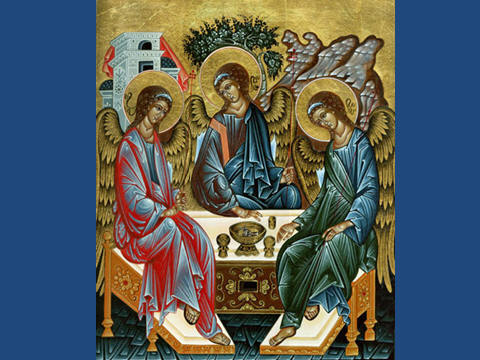
Entertaining Angels

Entertaining Angels
You are welcome to join in with your thoughts and spiritual inspirations and to share information. To write, click the word "comments" found after each post.
Showing posts with label Advent. Show all posts

Sunday, December 16, 2007

Saint Francis, Lover of All Creation

"When he considered the primordial sources of all things, he was filled with even more abundant piety, calling creatures, no matter how small, by the name of brother or sister, because he knew they had the same source as himself." (S. Bonaventure, The Life of Saint Francis.)

There are many stories about St. Francis and his encounters with animals, bird, fish and even insects. He rejoiced in the sounds of running water or blowing wind and walked reverently on stones. Nature became holy for him. He called all creatures and elements of creation, brother and sister. St. Francis saw everything created by God the Father and touched by the presence of the Word made flesh. He saw all creation as part of a divine family, deserving of our brotherly and sisterly love and respect. He saw great beauty in all that was around him and was enthralled by God’s presence in the created order.


"From all this, one can gather that
from the creation of the world
the invisible attributes of God are clearly seen,
being understood,
through the things that are made.
And so those who do not wish to heed these things,
and to know, bless and love God in all of them
are without excuse;
for they are unwilling to be transported
out of darkness
into the marvelous light of God."
(S. Bonaventure, The Soul’s Journey Into God)

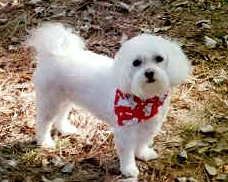
I am a Secular Franciscan, and mom to my little family of Maltese dogs. I have a very deep affection for them and those I foster. Dogs have a spirit which allows them to form relationships, to bond with us, to love, to be grateful, to trust, to want to be with us, and other wonderful attributes which make them worthy of our greatest devotion and care. They have the imprint of God upon them which is what St. Francis realized about all creation. They are for us the source of some of our greatest joys and sorrows – sorrow when they are sick or in pain or leave us to breathe their breath back to God.

All my dogs have been a ladder for me to God. They have taught me much about God and myself in relation to him. As a Christian and a Franciscan, I cannot be indifferent to God's creatures. Any Franciscan who is indifferent has missed understanding an important part of St. Francis' spirituality. His love of all created things was an extension of his deep love of the Creator. Thomas of Celano, biographer of St. Francis for his canonization, says:

"In every work of the artist he praised the Artist; whatever he found in the things made he referred to the Maker. He rejoiced in all the works of the hands of the Lord and saw behind things pleasant to behold their life-giving reason and cause. In beautiful things he saw Beauty itself; all things were to him good. 'He who made us is the best,' they cried out to him. Through his footprints impressed upon things he followed the Beloved everywhere; he made for himself from all things a ladder by which to come even to his [God’s] throne."

He embraced all things with a rapture of unheard of devotion, speaking to them of the Lord and admonishing them to praise him. He spared lights, lamps and candles, not wishing to extinguish their brightness with his hand, for he regarded them as a symbol of Eternal Light. He walked reverently upon stones, because of him who was called the Rock…

He forbade the brothers to cut down the whole tree when they cut wood, so that it might have hope of sprouting again. He commanded the gardener to leave the border around the garden undug, so that in proper times the greenness of the grass and the beauty of flowers might announce the Father of all things … he ordered that honey and the best wines be set out for the bees, lest they perish from want in the cold of winter." (Thomas of Celano, Second Life, cxxiv, 165\\)


In this time of Advent, let us remember that all of creation has the imprint of the Creator. In this time of Advent, let us remember how St. Francis prepared the Christmas crèche at Greccio and honored the animals by including them. Let us prepare our hearts for the coming of the Child of Bethlehem, making of it his crib. Let us honor God’s presence in all creatures and in all creation.

"Most High, all-powerful, good Lord,
Yours are the praises, the glory and the honor and all blessing,
To you alone, Most High, do they belong, and no human is worthy to mention Your name.
Praised be You, my Lord, with all your creatures . . . ."
(The Canticle of the Creatures by St. Francis)

Tuesday, December 4, 2007

St. Barbara - December 4th

Today is the feast day of St. Barbara. She was one of the early Christian martyrs. One story is that she died at Nicomedia in Asia under the persecution of Maximinus in 306. Another story is that her father, who had kept her prisoner in a tower, dragged her before the judge and accused her of being a Christian. She was given a chance to recant but refused. Beaten and tortured, she was comforted by visions of the Lord. At her execution, her father was killed with a flash of lightning.

Her veneration was brought from the Middle East by the Crusaders. She is the patron of all those who are imprisoned, of towers and fortresses, and of those whose work is connected with flashes of light, such as artillery soldiers, bellmakers, cooks, and beacon light crews. She is also the patron of architects because she was commonly pictured holding a tower building in her hand.

Her greatest and most important patronage is that against sudden death. In medieval times she was invoked with prayers and hymns to grant a peaceful and well-prepared parting from this life. The miners chose her as their special patron because their work exposes them to constant danger of sudden death. In many countries of Europe her day still is the official feast day of the miners and the military units of artillery.

Saint Barbara's Branch

This is an attractive custom, practiced in some parts of Europe today. On Saint Barbara's feast day, December 4th, small branches are broken from fruit trees, especially cherries, and put in a pitcher of water, kept in a warm room of the house. These branches then break into bloom around Christmas Day. Among the superstitions associated with the branches, it is said many blossoms indicate great good luck while no blossoms mean very bad luck. Also, the one whose twig bursts into flower just on Christmas Day is especially blessed and is sure that he will not die during the following year. Today, the Barbara Branch, in most places, is used as the Saint's tribute to the Holy Child in the crib, for the branches are brought into blossom with the purpose of using them to decorate our Lord's manger at Christmas.

For more on the life of Saint Barbara, go to: Life of Saint Barbara

Sunday, December 2, 2007

Advent Prayer

Rorate caeli desuper, et nubes pluant iustum.

May his dew, the dew of his grace fall gently upon us this Advent, persistently, continuously, penetratingly.......

Dew falls almost unperceived, in the early morning light... it falls in and through the silence, and in the silence we receive it...... the dew of his grace refreshes, cleanses and makes new. The dry land receives the dew with joy, this advent may our hearts too be open to his presence.

Rorate caeli desuper.

Drop down dew from above
and let the clouds pour down the Just One.

A Poor Clare Consecrated and Cloistered Nun

First Sunday in Advent 2007

Today is the first Sunday in Advent. For many, this time of the year is a time of both joy and sorrow. I remember the lighting of one of the Advent candles last year at my son's wedding. My mother's funeral had been the day before. How my mother would have loved to have been with us at the wedding! She was 90 years old when she died, had been living alone in her own home, driving her car and taking care of herself. She died on the eve of the Feast Day of Our Lady of Guadalupe. Our Lady became my mother more so that night in my motherlessness. I marvel at God's goodness to my mother in her life and in her death. I marvel at his divine timing last December and his mercy which moved us through a valley of tears into celebration and gratitude.

The beautiful Advent meditation, posted below, is by a Poor Clare Nun with a Poor Clare Colettine Community. She speaks to us about this time of joy commingled with sorrow.

Saturday, December 1, 2007

Mary, Our Advent Hope

"SALVE REGINA, Mater misericordiae.
Vita, dulcedo, et spes nostra, salve."

On the threshold of Advent many of us begin to experience a sense of anticipation and excitement as we look forward in expectation to the happiness and joy that we hope Christmas and its festivities will bring to us and our families.

The reality, however, is that for many of us --- and for reasons that seem to multiply with our years --- it may well come to us not as a road to the fulfillment of our dreams (and so often our illusions), but as an avenue through a Vale of Tears. Even our joy, however brief, whispers somehow that it is the harbinger of sorrow. We find this echoed in the beautifully written Catholic hymn, Salve Regina, in which our voices are raised to the Queen of Heaven to whom "we cry, poor banished children of Eve, mourning and weeping in this vale of tears"--- or more literally, "to thee we breathe out (suspiramus) our sighs...!"

"Ad te Suspiramus, gementes et flentes ..."

Sometimes the pain within us swells up like a bitter-sweet anthem, as painful in its beauty as it is sorrowful in its sound ... and the last note uttered is ever a protracted sigh. At such times, we can do only this, breathe out our sighs to God and to His Holy Mother. And in the quiet of that shallow breath, how often we empty our souls of all hope...

"in hac lacrimarum valle."

But Mary is our Advent hope ... whose heel, even now, is on that serpentine sorrow! She is our Mother in our motherlessness, our Queen in our broken servitude to sin, and she is our hope in the looming despair which would crush under both: our sin and our sorrow.

Yes, even the joy of anticipation in Advent so often comes to us commingled with sorrow. The festooned lights of our frail hope span the gulf of our grief and we are led to a passing; a passing within ourselves through a passing of all things. We are sojourners only, pilgrims withal, and exiles in longing. It is the fabric of our being --- as long as it is a being-apart-from-God. In Advent, then, we come to a twilight, and know not whether it precedes the dawn or the dark. How obscure is this valley, as fraught with hope as it is with impending despair!

But there is one who dwelt in this twilight before us.

How little she, too, understood, comprehended, perceived! How anxious her heart upon the threshold of the impossible; how obscure the way through which God would become man, and how meekly she questioned, even as she did not doubt, what was proffered by God! ... "How can this be?"

She knows our twilight, our consternation, our fear. "How can this be?", we ask of the promises of God --- "how can this be?" ... that this valley of tears will lead us to the summit of Paradise? That our sins without number will be numbered no more? Will the salt of our tears become the salt of the earth? And will this dust of the earth be raised up unto God? "Quomodo fiet istud?" "How can this be?"

Et Verbum caro factum est!", we affirm with our lips, embrace with our hearts each Sunday at Mass: "And the Word became flesh, and dwelt among us!" The Light came into this world, not in the day, but in the darkness!

It is Mary, then, whom we first find in this valley, "The Woman" who preceded not God, but "The Man" Whom God assumed in His Son. Mary ... the paradigm of the possible, in all that is impossible to man, but is possible to God.

Yes, Mary is the Mother of hope!

"Et Iesum, benedictum fructum ventris tui, nobis post hoc exsilium ostende.
O clemens, O pia, O dulcis Virgo Maria."

"And after this our exile, show unto us the Blessed fruit of thy womb Jesus, O Compassionate , O Holy, O sweet Virgin Mary."

Pray with Mary this Advent; not simply to her ... but with her, for her heart's desire is precisely what you ask of God: to lead you through this vale of tears that, at Christmas, she herself may show you, in the manger of your own poverty, the fruit of all hope, "the blessed fruit of her womb, Jesus."

I humbly offer this reflection to you with sincere prayers for a blessed and fruitful Advent --- especially for all who still dwell in a darkness.

A Poor Clare Consecrated and Cloistered Nun
Audio file:
learn the Salve Regina in Latin
Hail, holy Queen, Mother of Mercy!
Our life, our sweetness, and our hope!
To thee do we cry, poor banished children of Eve,
to thee do we send up our sighs,
mourning and weeping in this valley, of tears.
Turn, then, most gracious advocate,
thine eyes of mercy toward us;
and after this our exile show unto us the
blessed fruit of thy womb Jesus;
O clement, O loving, O sweet virgin Mary.

V. Pray for us, O holy Mother of God

R. That we may be made worthy of the promises of Christ.